
Housing and Homelessness Scenario Modelling
Simulate housing and homelessness scenarios to inform strategic, cost-effective, and equitable decisions for your community’s future.




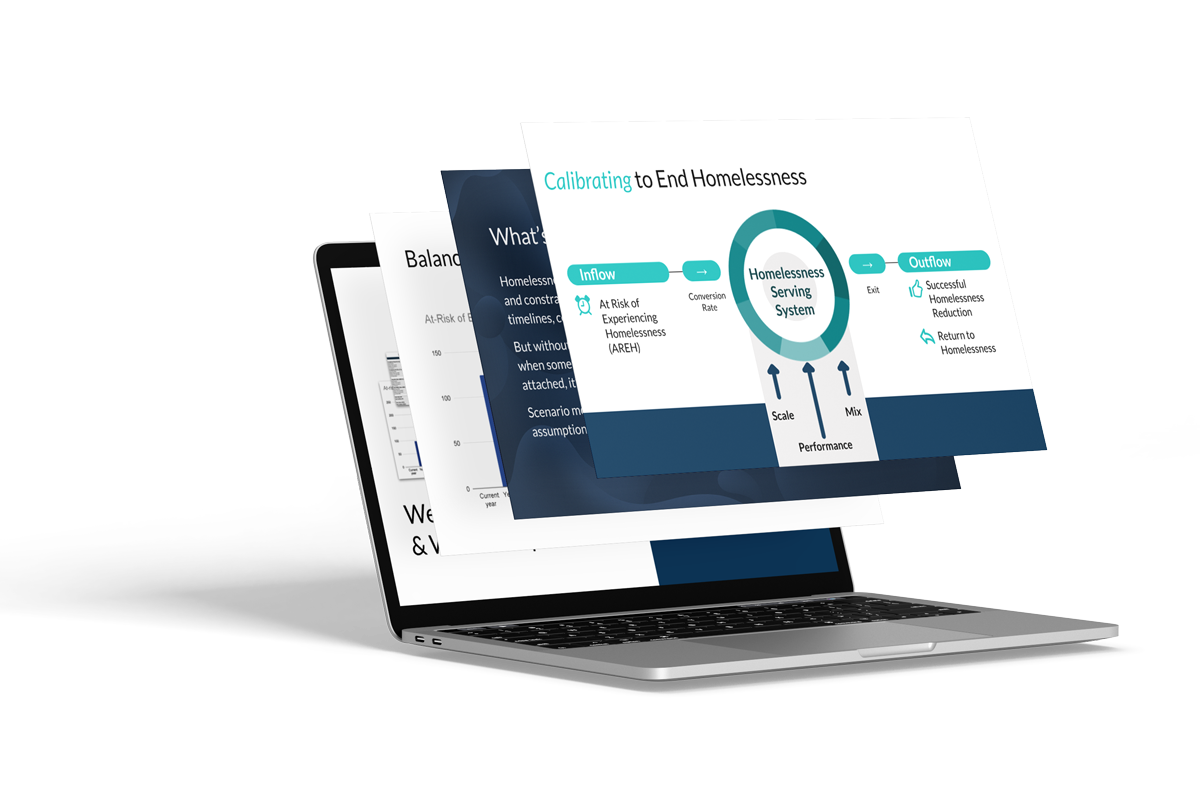
Our Housing & Homelessness Scenario Modelling lets you test how different assumptions, decisions, and investments could shape homelessness outcomes over time.
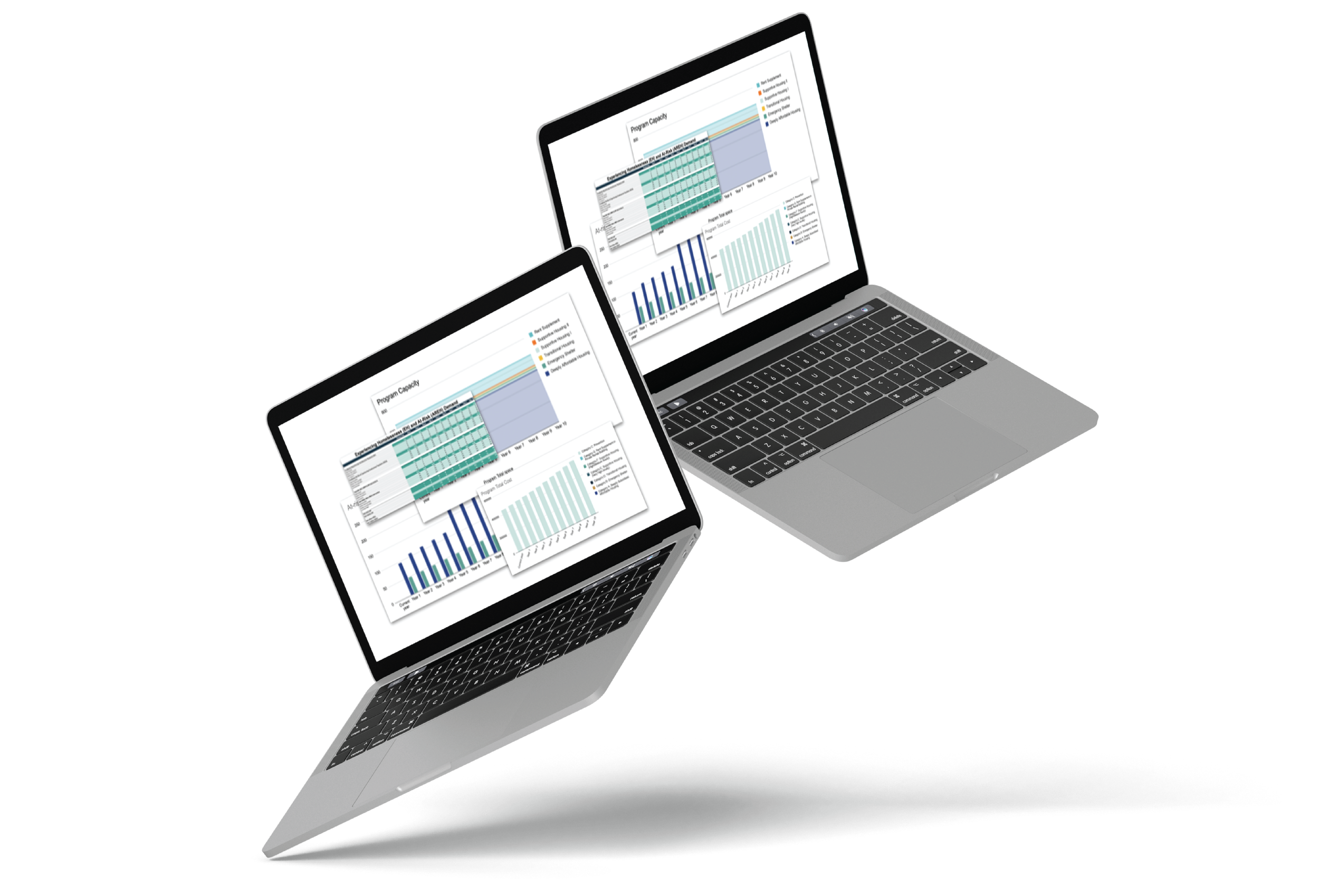
We use a structured logic model to link inputs (such as program capacity, costs, length of stay, and exit rates) to outcomes (including system demand, unmet need, and movement in and out of homelessness). By adjusting these variables, we can simulate scenarios ranging from modest program tweaks to bold policy shifts – and see their implications before committing resources.
This means you get evidence-based insights to guide housing and homelessness decisions now and in the long term – helping your community plan proactively for whatever the future holds.
At its core, it helps answer the critical question: “If this happens… then what?”
Our Scenario Modelling helps you understand:
How program changes affect homelessness trends
When and where systems may get stuck or start improving
The consequences of delayed action or the status quo
The true cost of various intervention strategies (shelters, prevention, housing)
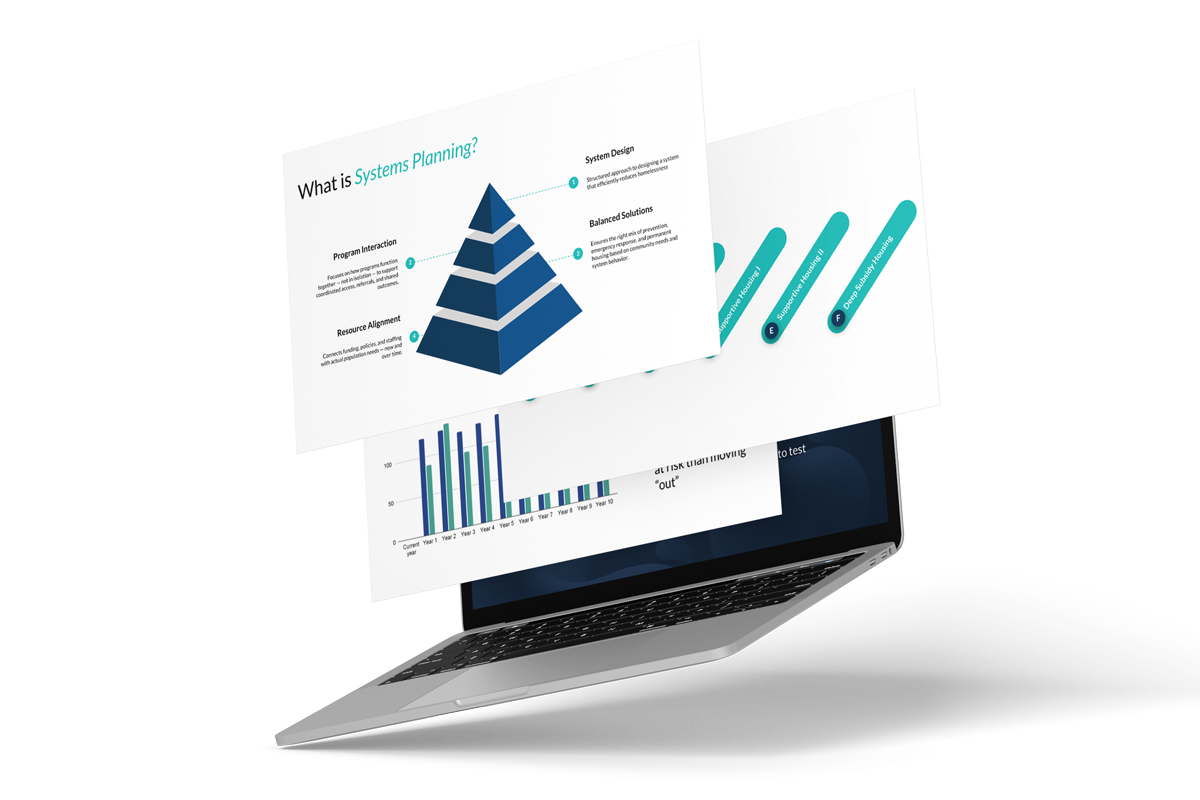
Benefits of Housing & Homelessness Scenario Modelling

Confident Strategic Planning
Integrate solid evidence into your strategic plans.
Diversity Matters
Plan interventions that reach those who need them most.
Informed Investment Decisions
Support your budget and funding decisions with data.
Accelerated Homelessness Reduction
Focus on what truly moves the needle.
Holistic System Design
See the “big picture” of how all parts of your housing system work together.
Funding Prioritization
Make a compelling case for resources and use them wisely.

Key Features & Use Cases
-
Safely explore different hypotheses about your housing system. You can adjust assumptions – for example, “What if we increase supportive housing units by 20%?” or “What if the economic downturn causes a 10% rise in inflow?” – and immediately see the projected results.
-
Compare multiple strategies side by side to see which yields better outcomes. For instance, you might model Scenario A with an expansion of emergency shelter beds and Scenario B with an expansion of long-term housing subsidies.
-
Understand your system’s capacity to handle demand. You can evaluate, for example, if your current housing programs can absorb a surge of people at risk of homelessness, or how long people would wait for services under different funding levels.
-
You can test budget scenarios – what if we invest an extra $1M in rapid rehousing vs. in shelters? – and see how those investments translate into reduced homelessness or shorter shelter stays.
-
Adjust performance metrics like program capacity, average length of stay, and housing placement (exit) rates to see how improvements or changes would affect the overall outcomes. For example, “If we improve the shelter exit rate by 15%, how much more quickly do people exit homelessness?”

We ground the model in reliable data (e.g., homeless counts, program metrics) and proven research. Every assumption – from inflow rates to program costs – is backed by data or clear reasoning, ensuring the scenarios are credible and relevant to your community.

We openly document all assumptions and invite your team’s input at every step. By collaborating with municipal staff, planners, and community organizations, we incorporate local knowledge and build shared understanding.
We design the modelling around the outcomes that matter most – like reduced homelessness, improved housing stability, and other key goals. Each scenario is evaluated by its impact on these outcomes, keeping attention on what truly counts for your community.
Our modelling emphasizes cost-effectiveness, showing the return on investment for various strategies. We link dollars to outcomes, so you can identify which interventions deliver the greatest impact per dollar spent.
We consider how different demographic or vulnerable groups are affected under each scenario, helping you plan interventions that are fair and inclusive. This ensures alignment with equity commitments by identifying who benefits and where gaps remain.
We don’t just look at the next budget cycle; we help you simulate long-term scenarios (5, 10, even 20 years out). By anticipating how needs and outcomes evolve, you can craft plans that stand the test of time.
Why Scenario Modelling Matters
When addressing housing needs and reducing homelessness, resources are limited, the environment is constantly changing, and decisions must be made with accountability and transparency. Scenario Modelling is important because it shifts the approach from reactive to proactive. Instead of hoping a plan works, you can see how and why it might work.
This scenario-based approach allows municipal staff, housing planners, policy teams, and nonprofit leaders to make informed choices grounded in evidence. You can test ideas like expanding shelter capacity or increasing rent subsidies and immediately understand the projected impact on homelessness numbers, costs, and community outcomes.